
 June 1, 2026
In 2026, the virtual server market has changed significantlyy. Some providers offer attractive pricing or bonuses, while others stand out for their high speed and NVMe drives. To help you make the right choice, we’ve compiled our own ranking of the best VPS hosting services.
How we selected the best VPS hosting providers
Choosing a reliable VPS host ensures stable website operation, fast response times, and data security. By carefully comparing different providers, we’ve identified the top-performing VPS servers based on the following criteria:
- Performance – including RAM, storage type (SSD/NVMe), and CPU speed. These are especially crucial for high-load web projects.
- Network speed – traffic bandwidth and latency, which directly affect uninterrupted access to your online resource.
- Reliability and uptime – based on test results. The higher the uptime, the lower the risk of downtime or disruption.
- Pricing flexibility – availability of different configurations and scalability options. A free trial is a significant advantage.
- Additional features – such as server management, backups, DDoS protection, and other extras, often available for an additional fee.
- Location – Russian or international providers, taking into account legal nuances. The data center’s location is selected based on your business’s target audience.
- User reviews – feedback from real users on independent platforms, helping to reveal hidden pros or cons of each provider.
- Customer support – expertise and responsiveness of technical staff. Reliable support is essential, especially for mission-critical online projects.
- Price – the balance between performance and cost. Affordable options don’t always mean poor quality — the best VPS hosts often offer the best price-to-performance ratio. Some even support hourly billing.
Our catalog features the leading providers offering virtual server rental services. Each of them has undergone thorough evaluation and received scores based on dozens of criteria. We considered key factors such as server stability, performance, pricing, and the quality of technical support. Thanks to this, you can be confident in the quality and reliability of the hosting provider you choose.
To make navigation through the ranking easier, we provide concise yet informative reviews of each service. These reviews contain the most up-to-date and accurate information about the providers, their technical specifications, pricing policies, and additional features.
We are confident that our VPS hosting ranking will help you choose a platform that fits your needs, budget, and business goals. Using a high-quality VPS is especially important for high-traffic online resources such as corporate websites, online stores, and content-heavy projects. Our top VPS list will guide you to the right provider to ensure the stability of your project and support your business growth.
Summary Table of the Best VPS Hosting Providers
Below is a comparison table where you can evaluate the features and offerings of different providers:
| Top VPS Hosting Providers | Plan | Resources | Monthly Price | Trial Period (days) | Uptime |
|---|---|---|---|---|---|
| Timeweb | Standard | 1 CPU core, 1 GB RAM, 15 GB SSD | 300₽ | 10 | 99.98% |
| REG.RU | Basic | 1 CPU core, 1 GB RAM, 10 GB SSD | 390₽ | 14 | 99.78% |
| PSB Hosting | Basic | 1 CPU core, 1 GB RAM, 15 GB SSD | 482₽ | –– | 99.99% |
| UFO.Hosting | Basic | 1 CPU core, 1 GB RAM, 25 GB NVMe | 577₽ | 1 (on request) | 99.959% |
| VDSina | Standard | 1 CPU core, 2 GB RAM, 50 GB NVMe | 600₽ | — | 99.99% |
| AdminVPS | Basic | 1 CPU core, 1 GB RAM, 15 GB NVMe | 219₽ | 7 | 99.94% |
Best VPS Hosting by Category
Our ranking includes only the best VPS providers in Russia, so you can’t go wrong with any of them. Some are mostly focused on new users, while others offer more advanced server customization options. There are basic and affordable plans, as well as more expensive ones that include a range of additional features.
If you're still unsure about your choice, here are a few recommendations.
REG.RU is undoubtedly the best option if you're switching from shared hosting to VPS or looking for a beginner-friendly solution. It offers a wide range of hosting services, including a free month as a bonus.
However, for working with neural networks and artificial intelligence, UFO.Hosting is likely the best choice. Their GPU-optimized instances are well-suited for deep learning and AI.
Looking for VPS for business or online stores? Then take a look at Timeweb – it's one of the most stable VPS hosting providers, offering flexible configurations tailored for business needs.
For high-load projects with traffic up to 10,000 users per day, VDSina is ideal. They offer VIP-class plans with increased load limits and disk space, ensuring fast performance even for demanding platforms.
Need the most cost-effective plan but still a reliable VPS for VPN? AdminVPS could be the right fit for you. It provides solid performance at an incredibly low price.
But if you’re looking for a truly perfect service, PSB Hosting stands out. It delivers high performance and offers a wide range of services. It’s arguably the best solution on the market.
Overview of Popular VPS Providers
Let’s take a look at the 6 best VPS providers that offer the most favorable conditions for clients. All the services listed below offer a wide range of configurations and pricing plans, along with support for automatic data backups.
Timeweb
Timeweb is a Russian service focused on providing IT infrastructure for startups, businesses, and independent developers. It has been operating since 2006. The company offers a full range of services, including VDS/VPS, shared hosting, and dedicated servers. The platform is optimized for CMS and includes its own website builder. VPS plans start from 1 GB of RAM, and server configurations can be customized. The hosting is protected against DDoS attacks, with a special mitigation page shown in case of an attack. Server management can be done through the proprietary panel, ISPmanager Lite, or Vesta. A 10-day demo period is available.
A variety of plans are offered. VPS hosting prices start from 300 RUB per month. Support is available from 8 AM to 8 PM Moscow time, and specialists can be contacted anytime via Telegram, email, or chat.
Pros:
- Guaranteed stable performance for all online projects
- High uptime
- Own data centers in Russia and Kazakhstan
- Intuitive control panel
- Website development services available from professionals
- Support includes free calls and callback options
- Wide selection of plans
- Access to licensed software at a reasonable price
- Affiliate program with payouts of up to 40%
Cons:
- Strict limits on allowed server load
- High prices for some service packages
Best for: Owners of large online projects and corporate clients who value stability.

REG.RU
REG.RU is a reliable Russian hosting provider that also serves as an accredited domain name registrar. The company has been operating since 2007 and holds the official status of a certified registrar. Users can choose from several types of hosting plans – including basic, high-speed, and extended configurations. Prices start from 390 RUB per month. For beginners, there's a 14-day free trial to evaluate the service.
Server deployment is instant. The support team is available 24/7, and ticket processing is quick. Thanks to a well-designed control panel, managing web resources is simple and intuitive. Additional services are available upon request and billed separately.
Pros:
- The largest hosting provider in Russia
- NVMe drives and high-performance processors
- Automatic backups
- Free protection against DDoS and other types of attacks
- Own data centers in Moscow, Samara, and St. Petersburg
- Free website migration for CMS-based platforms
- API for server management
- Network isolation for clients
- 24/7 technical support and professional administration
- Auto-installation of applications
- A wide range of enterprise-level services
- Flexible plans with step-by-step upgrades and hourly billing
- Special offers for new clients when switching providers (one month of free hosting)
Cons:
- No VPS plans with Windows OS
- Server administration services are paid separately
- Downgrading plans is not supported
- ISO upload available only upon request
- Discounts apply only after one month of use
- Relatively high pricing
Best for: Beginners and users who value convenience and ease of use.
PSB Hosting

PSB Hosting is one of the best international VPS hosting providers. Founded in 2019, the company focuses on delivering high-performance services. Its data centers are located in Germany, the USA, Hong Kong, Turkey, and the Netherlands. The servers run on modern Intel and AMD processors, feature up to 10 Gbps bandwidth, DDR5 RAM, and NVMe storage. A wide selection of pre-installed software is available, including VestaCP, Keitaro, FastPanel, Docker, LAMP, Node.js, OpenVPN, and Bitrix.
Customer support is available 24/7. All plans include unlimited traffic. There are multiple configurations available with varying amounts of RAM, CPU cores, and disk space, allowing users to choose the best option for any task. Cloud servers are activated within minutes.
Pros:
- Wide selection of operating systems and software
- Unlimited bandwidth across all plans
- User interface available in both English and Russian
- Reliable Tier III and Tier IV data centers
- Diverse global locations
- Full control over the server
- Variety of pricing plans
Cons: No free trial, but a 3-day money-back guarantee is offered if you decide to cancel after payment.
Best for: Owners of web applications, online stores, and corporate websites who prioritize high performance and stability.
UFO.Hosting
UFO.Hosting is a Russian hosting provider with a large global presence, offering VPS locations in over 45 countries and the ability to pay in rubles. Thanks to standard server configurations, it ensures ease of management, stability, and accessibility. Plan upgrades can be performed with a single click. Basic DDoS protection is included for free.
All server nodes are based on Intel Xeon 2×E5‑2697v4 processors and are company-owned. All servers are located in data centers rated Tier III or higher. In Russia, the data center is located in Moscow. Unlimited traffic is available across all locations, with no restrictions. Users can install any control panel, choose from 10+ OS templates, and use over 50 preconfigured environment installation scripts.
Pros:
- 45+ global locations, including Russia
- Automatic VPS backups (daily or weekly)
- Unlimited traffic with basic DDoS protection
- Company-owned hardware
- Refund of unused account balance
- ISPmanager license sales
- All servers located in Tier III+ data centers
- Support for custom ISO uploads
- 24/7 technical support
- Free DNS hosting
- Professional TLS/SSL certificates available
- Standard VPS configurations with instant upgrades
Cons:
- No separate upgrade of individual VPS resources
- All auto-backups are paid
- No server management services available
Best for: A wide range of projects – from small online platforms to large companies developing AI and intelligent systems.

VDSina
VDSina is a Russian hosting provider operating since 2014, specializing in servers with KVM virtualization. SSD and NVMe-based storage ensures stable performance and fast load times. All servers come with free and effective DDoS protection. Server management is handled via ISPManager and VestaCP control panels.
Servers are activated just a few clicks after ordering. The provider offers a wide range of VPS plans. Prices start at 600 RUB per month. Users can upload their own ISO images to install the desired OS and software. The available resources are sufficient for large-scale projects. The company’s equipment is hosted in partner data centers in Moscow (Russia) and the Netherlands.
Pros:
- Dedicated hardware in data centers
- NVMe storage with triple data redundancy
- Simple and user-friendly control panel
- Responsive technical support
- Reliable storage of VPS server images
- Free DDoS protection
- Support for popular operating systems
- Wide variety of hosting plans
- Effective referral program
Cons:
- Extra IP addresses are paid
- No server management services
- All plans include traffic limits
- High commission fees when adding funds
- No own data centers
Best for: A wide range of tasks – from launching online stores to deploying web applications and corporate services that require speed and reliability.
AdminVPS
AdminVPS is another Russian hosting provider, notable for not owning its own data centers. The company has been operating since 2015. Its servers are hosted in various data centers around the world – including the Netherlands, Russia, Germany, Finland, and other countries. Users can choose server locations to improve performance.
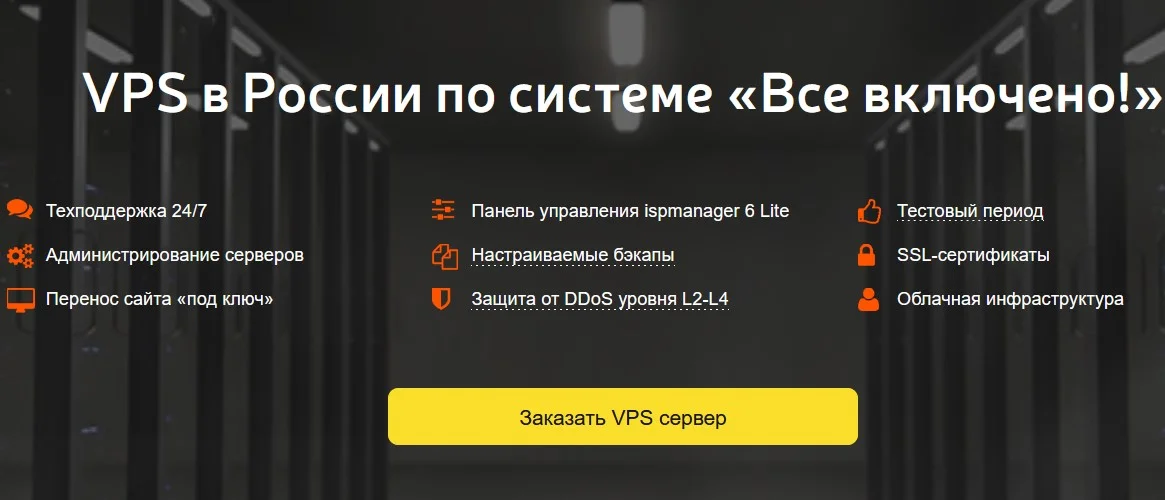
The provider focuses on convenience, stability, and flexibility with an «All-Inclusive» approach. This includes the ISPmanager control panel, free server administration, backups, and 24/7 technical support. DDoS protection systems can handle attacks up to 100 Gbps. Plans start at just 219 RUB per month.
Overall, if you're looking for a VPS plan on a tight budget, AdminVPS is a solid choice. However, it’s best to rent the server with the «All-Inclusive» package – which covers advanced management and the ISPmanager 6 Lite panel.
Pros:
- Wide range of server locations – Europe, Russia, CIS
- All data centers are Tier 3 or higher
- SSL certificates available
- Strong DDoS protection
- Optimization for various CMS platforms
- Assistance with website migration
- Instant server activation after payment
- «All-Inclusive» option (premium administration + ISP 6 Lite panel)
- Responsive and helpful technical support
Cons:
- Some plans have relatively high pricing
- No hourly billing options
- Test access is available only for legal entities and sole proprietors
Best for: Beginners and users who need help with server administration.
How to Choose a VPS Hosting Provider in 2026: Step-by-Step Mini Guide
To choose the right VPS server, you need to evaluate several key factors. A poor decision can lead to downtime or high unexpected costs. Here are a few important points to keep in mind:
Goals
When selecting a provider for your project, start with your actual goals – and only then look at pricing.
If you need an operating system other than Linux and require maximum stability, consider KVM virtualization.
If your project is small but expected to grow, look into plans based on OpenVZ virtualization – this technology allows you to scale without migrating to another server.
The more clearly you define your objectives, the easier it will be to find the right VPS for your website.
If your project needs to comply with specific standards such as HIPAA or GDPR, check whether the provider can offer the necessary legal guarantees.
Remember: choosing the best VPS is an investment in the security, reliability, and speed of your business.
Managed or Self-Managed
You can either manage the server yourself or delegate this task to the hosting provider.
If you have IT experience, self-management is the optimal option – it allows you to choose a cheaper VPS and save money.
If you lack the technical knowledge or time to manage a virtual server, it's better to leave it to the provider.
Most hosting companies offer multiple plans that include prepaid technical support.
Server Location
In VPS operation, ping is a critical parameter – it refers to the time it takes for a signal to reach the server and return. The lower the ping, the faster the page loads.
That’s why it’s important to choose a high-speed VPS whose data centers are located as close as possible to your target audience.
If your audience is distributed across different parts of the world, it’s better to choose a provider with data centers in multiple countries. This allows you to replicate your VPS across different servers for improved performance.
Note: Be aware of legal regulations – personal data of Russian citizens must only be stored on VPS servers that are physically located within Russia.
Server Management
Experienced users typically work with virtual machines via the command line.
For clients without technical expertise, a control panel is a better option for managing data exchange and configuring security settings.
Most providers offer VPS hosting with popular control panels like FastPanel, Hestia, ISPmanager, or Plesk.
Pricing
The cost of hosting services can vary significantly depending on the provider, level of support, and available resources.
Conduct a comparative analysis to choose the best service in terms of price-to-performance ratio.
However, avoid chasing the cheapest option, as it may negatively affect performance, reliability, and security.
Also, don’t forget about additional expenses, such as backup services, software licenses, and other optional features.
Technical Support
Pay attention to the support team's availability. The service should respond to requests as quickly as possible, regardless of the user's location.
Choose platforms that offer 24/7 technical support for their clients.
It’s also important to check whether the provider offers flexible plans, automatic backups, and scalability options.
If you're launching a web application, corporate platform, or online store, your VPS server becomes the backbone of your business.
Remember: never cut corners on performance – it's the key to stability and earning your customers’ trust.
What’s New in VPS in 2026
In 2026, the demand for VPS platforms continues to grow, and providers are offering increasingly flexible and powerful solutions for online businesses.
New software developments and modern hosting technologies are improving server performance, boosting security, and making web resource management easier than ever. These innovations make cloud servers highly efficient, user-friendly, and reliable – contributing to their continued popularity.
Here are some key innovations in VPS:
- GPU support
Access to extremely high computing power without the need to purchase expensive hardware. Most providers offer rental of NVIDIA Tesla and NVIDIA GTX graphics cards. - Implementation of IPv6
IPv6 provides virtually unlimited unique IP addresses, enabling the connection of multiple devices and resolving the IPv4 address shortage. - Security-focused VPS
New services now offer isolated environments, built-in DDoS protection, and regular snapshots. In the near future, we’ll see the introduction of more advanced security tools – including AI-based threat detection and prevention. - Intelligent monitoring
AI plays a vital role in VPS management, analyzing large volumes of data to predict potential failures, anticipate resource needs, and optimize server performance. - Growth of containerization
Hosting solutions are increasingly integrating with platforms like Kubernetes and Docker, enabling more scalable, easily managed applications. - Hybrid solutions
With integration into multi-cloud platforms, users can benefit from the advantages of various hosting providers – allowing them to choose the most optimal resources for specific tasks. - Energy-efficient hardware
As sustainability becomes more important, VPS solutions are being designed to reduce environmental impact – including cooling optimization, use of energy-efficient hardware, and technologies that lower energy consumption. - Transparent pricing models
Hosting providers are adopting hourly billing, so users always know their actual costs.
The future of VPS is undoubtedly driven by innovation. Increased performance, automation, and enhanced security are just around the corner.
By using IT resources more effectively, businesses will be able to adapt faster to rapidly changing market conditions and reduce operational costs.
Frequently Asked Questions
How is VPS different from shared hosting?
To better understand the difference, imagine this example:
Shared hosting is like living in a communal apartment – all resources are shared among users. If one «neighbor» throws a party and runs Python scripts, your site might slow down or crash.
A VPS, on the other hand, is like having your own apartment in a multi-unit building – no one can disturb you. You get dedicated resources, can run your own applications, install any operating system, and have much more control.
What is KVM / OpenVZ?
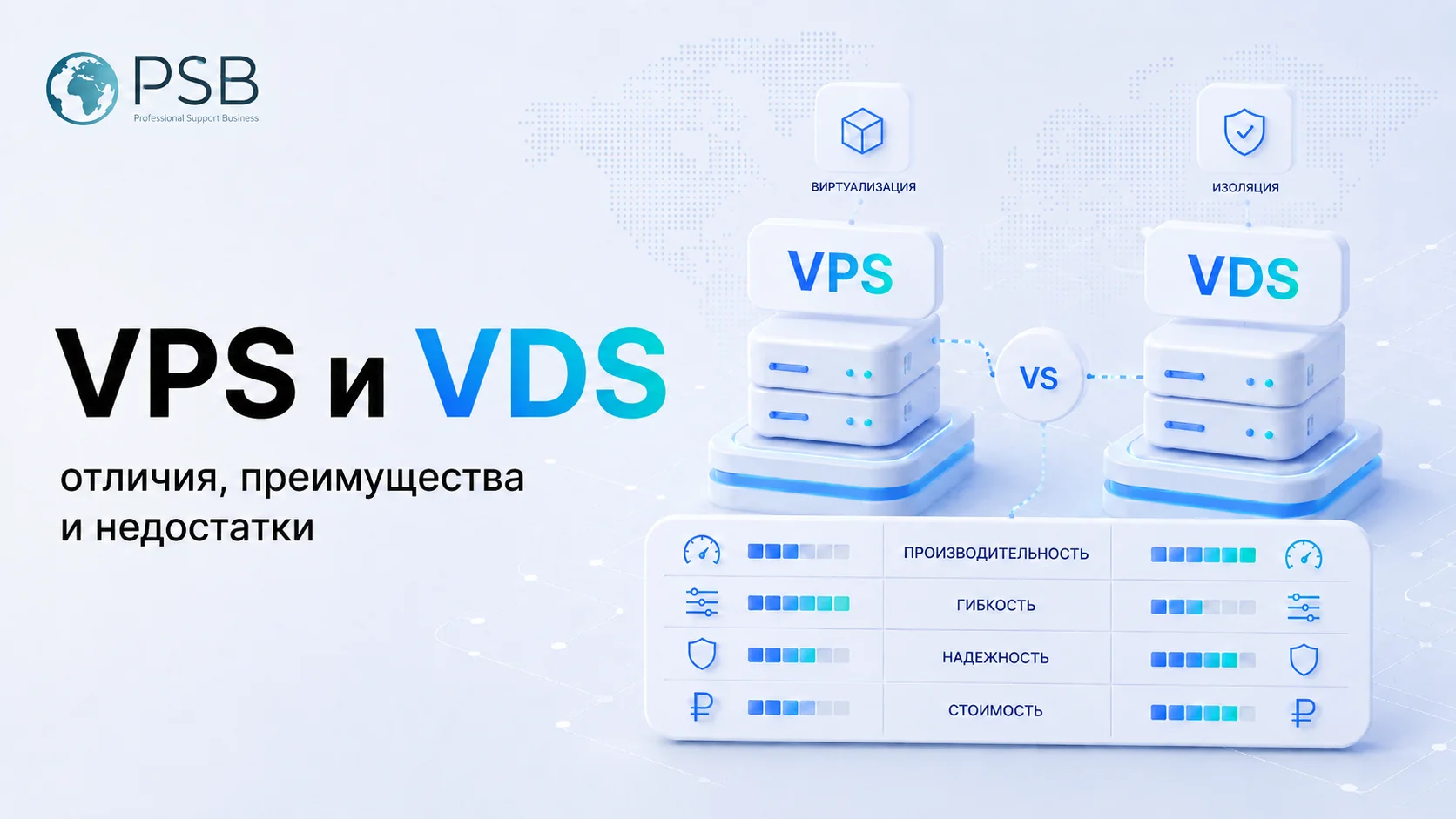
OpenVZ is a virtualization technology that operates at the operating system level and allows launching isolated containers on a single physical server. Its main limitation is that it only supports Linux distributions.
KVM (Kernel-based Virtual Machine) is a hardware virtualization technology built into the Linux kernel. It enables full virtualization of a server, essentially emulating a physical machine. Users can customize and modify the operating system with no limitations.
The core difference between KVM and OpenVZ lies in their architecture: OpenVZ runs on the OS level, while KVM emulates full hardware-level virtualization.
How do I switch hosting providers?
Switching providers isn’t just about canceling one contract and signing another. Migrating your website from one host to another involves a number of technical steps.
You can transfer your site manually or let your new provider handle the migration.
The second option is usually more convenient (if available), and we recommend choosing a host that offers free or assisted migration.
Conclusion
Choosing the right server depends on your budget and specific needs. Whether you're looking for an affordable VPS with a trial period or a premium-class virtual server, it's important to focus on performance, reliability, and the quality of the provider’s technical support.
There are many solid VPS providers on the market today, but PSB Hosting still stands out as the clear leader – thanks to its combination of stability, speed, security, and top-tier service.
We hope this ranking helps you make the right choice.