 June 5, 2025
Working with digital technologies is impossible without reliable tools. To ensure data is stored correctly, not lost, and remains accessible, software is essential. Usually, a DBMS — a database management system — is used. It is responsible for data preservation, structure, and access. Among many solutions on the market, PostgreSQL stands out. This platform is used by banks, internet companies, and government agencies due to its stability, security, and flexibility.
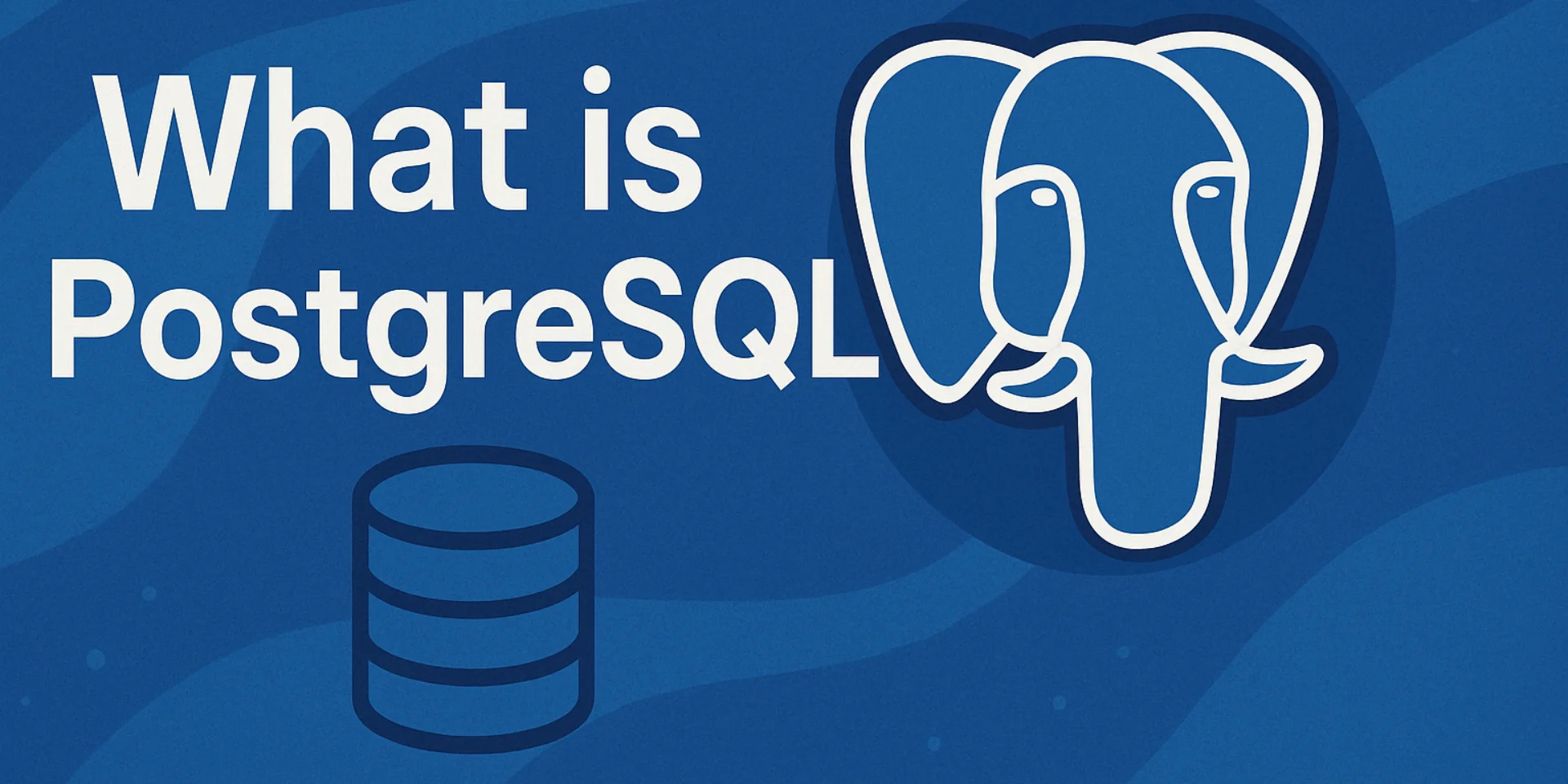
What is PostgreSQL
PostgreSQL is a powerful object-relational database management system (DBMS). It is designed to manage data in modern IT systems and is suitable for complex and scalable solutions. It provides fault tolerance and high performance. PostgreSQL is compatible with various operating systems, including Linux and Windows. It uses open-source code, which makes it especially popular.
The platform is most commonly used for:
- Corporate data warehouses;
- Analytical systems;
- Online stores and marketplaces;
- CRM and ERP platforms;
- Mobile services;
- Scientific research;
- Governmental and municipal institutions.
The DBMS helps build complex storage architectures. It supports all major data types, ensures strict data integrity, and facilitates fine-grained access and role management. It includes replication and backup mechanisms, supports SQL and other languages, and is convenient to configure and use even in large projects.
Project History
The project started in 1986 at the University of California, Berkeley. The research was led by Professor Michael Stonebraker. The original name of the project was POSTGRES. It was a logical continuation of the work on Ingres. Even then, the focus was on extensibility and reliability.
In 1996, the platform was renamed PostgreSQL to emphasize its use of the SQL language. It began to develop not only in academic circles but also in commercial environments. Programmers and engineers from around the world joined the project.
Over the years, its functionality expanded. Support for JSON, XML, and geographic data was added. Replication and scaling mechanisms were implemented. The system became cross-platform and flexible. Large companies started adopting it. Today, PostgreSQL Server is a mature, actively developing project that confidently competes with paid solutions without compromising on capabilities.
Advantages of PostgreSQL
The platform is well-suited for large projects and handling vast amounts of data. It performs reliably under heavy loads and scales efficiently. It supports complex configurations and business logic. PostgreSQL is flexible, equipped with powerful tools, and as reliable as commercial solutions — yet it is free. It fits both startups and large corporations. Its popularity is due to:
- Object-relational model: Combines table and object handling, allowing the use of advanced data structures.
- Handling large volumes of data: Suitable for processing millions of records and optimized for Big Data analysis.
- Open source and free distribution: Usage is free even for commercial purposes, with source code available for customization.
- Active community: The project is continuously improved, ensuring fast response to bugs and feature requests.
- Scalability: Supports both horizontal and vertical scaling, ideal for clustered architectures.
- Support for popular data types: Works with JSON, XML, NoSQL, and geographic data, offering a versatile storage and processing engine.
- Multifunctionality: Includes triggers, procedures, indexes, types, and functions, suitable for complex business logic.
- Reliability: Used in mission-critical systems, proven by time and adoption by large enterprises.
Cross-platform compatibility is also noteworthy. The software can be installed on Linux, Windows, and macOS. It integrates well with cloud solutions, making it a universal tool for various tasks. Developers run it on local machines, while system administrators deploy it in data centers and cloud services.
Drawbacks and Limitations
Despite its many advantages, the DBMS has some downsides, especially noticeable during implementation and setup. It requires a solid understanding of its architecture and operating mechanisms. Sometimes, specialist training is necessary. It’s also important to consider the load on hardware, as not every server can handle PostgreSQL without optimization.
Key limitations include:
- Complex configuration: Requires knowledge of configurations and system parameters. Without experience, there’s a high risk of errors.
- Resource demands: Consumes a lot of memory with large data volumes. Powerful servers are needed.
- Support challenges: No centralized support service exists. Users rely on the community and documentation.
However, these drawbacks are not critical. Most issues can be resolved with proper preparation. Configuration can be automated, and powerful servers are now reasonably priced. The active community is always ready to help. Installation typically poses no problems for administrators. In return, users get a powerful, reliable, and flexible database system with plenty of capacity for future growth.
Why PostgreSQL Is Becoming the Industry Standard
The platform is gaining popularity in the business world. It is chosen by banks, IT companies, and government agencies because of its stability and fault tolerance. Its wide range of features is convenient for developers, and its high performance is crucial for scaling. The DBMS is used in projects with all kinds of workloads. All these factors make it the industry standard.
Support in AWS, GCP, Azure
The software is part of the ecosystem of major cloud providers. It is available on AWS, Google Cloud Platform (GCP), and Microsoft Azure. Developers can quickly deploy the desired configuration using ready-made templates, simplifying administration and updates. Backup management is automated and everything is accessible through an easy-to-use interface.
Cloud software capabilities include:
- Automatic scaling based on load.
- Configuration of fault-tolerant clusters.
- Centralized resource monitoring.
- Simple access rights management.
- Quick installation via console or GUI.
This software has become a reliable cloud database foundation. Support from major providers confirms its demand. It reduces infrastructure costs and helps accelerate application launches. The software easily adapts to business requirements.
Use in DevOps, Docker, and Kubernetes
The platform easily integrates into DevOps workflows. The database is used in containers, with Docker image builds happening very quickly. Kubernetes automates scaling and updates, enabling deployment of any infrastructure. It’s ideal for projects with frequent releases, improving stability in both testing and production environments.
Examples of implementation:
- Creating CI/CD environments with PostgreSQL.
- Testing new features in containers.
- Setting up fault tolerance using StatefulSets.
- Deploying clusters via Helm Charts.
- Integration with logging systems.
The software runs well on Linux and other operating systems. It integrates seamlessly with DevOps tools, speeding up new product development, increasing reliability, and accelerating update releases. It also helps teams quickly respond to changes.
The Role of PostgreSQL in Modern Tech Stacks
A technology stack is the foundation of any project. PostgreSQL integrates smoothly with various components. It’s used with programming languages like JavaScript, Python, and Go. It’s compatible with frameworks such as Node.js, Django, and Spring. It also works alongside event brokers and APIs.
Key uses include:
- Working with REST and GraphQL interfaces.
- Organizing microservices with a shared database.
- Implementing event queues via external services.
- Supporting JSON and XML formats.
- Interacting with business logic layers.
Thanks to its versatility, PostgreSQL fits into virtually any stack. This simplifies development and maintenance. It supports flexible data storage schemas and easily adapts to specific requirements, saving resources and reducing architectural complexity.
Why Companies Are Switching from MySQL, MongoDB, and Oracle to PostgreSQL
Organizations are moving away from outdated solutions. PostgreSQL offers advanced features, is free of charge, and is free from vendor lock-in. MySQL often lacks flexibility. MongoDB doesn’t always handle transactions well. Oracle comes with significant costs.
Reasons for switching:
- Availability of advanced analytics features.
- Support for transactional logic.
- Compliance with SQL standards.
- Free license without restrictions.
The system suits companies of all sizes. It’s chosen for its wide range of functions and stability. Simply put, it’s a smart choice for business. The project is actively developed by a strong community, providing a reliable foundation for any goal.
When PostgreSQL Is Better Than Other Solutions (MySQL, MongoDB, Oracle, etc.)
The platform excels in projects with strict requirements. It is suitable for rigid schemas and high workloads. It is effective where a reliable transactional structure is needed. Especially advantageous when flexible data types are required. It is also important for working with geographic information.
When to choose PostgreSQL:
- When large tables need to be processed without performance loss.
- When transaction accuracy and consistency are critical.
- When working with both structured and semi-structured data.
- When fast, seamless service scaling is necessary.
- When the project is designed for long-term data storage.
The database management system ensures stability. It supports operations in critical environments. It is used in banking, logistics, and scientific research. This solution is for those who value reliability and seek a versatile, resilient platform.
Typical Use Cases: Analytics, CRM, SaaS, Fintech, Geographic Information Systems
The DBMS is suitable for various industries. It is used in analytics and reporting, client data management, SaaS products for subscription data storage, financial companies for transaction processing, and geoinformation services for routes and coordinates.
Common scenarios:
- Generating summary and dynamic reports.
- CRM systems for storing client profiles.
- Subscription platforms with different pricing plans.
- Real-time transaction tracking.
- Route building based on geospatial data.
PostgreSQL supports various data types, simplifying work with tables, coordinates, and strings. Indexing speeds up data retrieval. Flexible settings enable the creation of complex queries. The software is suitable for both on-premises and cloud solutions.
Why PostgreSQL is Popular in Startups and Government Systems
Startups choose this DBMS for its fast deployment. Installation requires no costs. Its flexibility offers room for experimentation. Community support is crucial for projects with limited budgets.
Advantages:
- Easy setup and launch.
- Handles large volumes of data.
- Compliance with standards.
- Detailed documentation.
- Open architecture.
Government agencies need stability. PostgreSQL helps build reliable services. It meets strict information security requirements. This makes it suitable for a wide range of projects.
Choosing PostgreSQL in the Context of Import Substitution and Open Source–Oriented Projects
Import substitution requires moving away from foreign solutions. This platform fully meets these conditions. It is a free, open-source DBMS. It runs on Linux and supports SQL standards. Installation is independent of foreign vendors.
Where the platform is in demand:
- IT with a focus on independence.
- Infrastructure of government institutions.
- Research projects.
- Solutions in education and science.
- Data storage and analysis platforms.
Choosing PostgreSQL is a strategic decision. It reduces dependence on paid products and helps build proprietary IT ecosystems. The SQL language and architecture simplify integration.
Installing PostgreSQL: A Brief Guide
First, you need to download the distribution. Go to the developer’s website. Choose the appropriate version depending on your OS. Click the download button. The file will download automatically.
The installation process on Windows is standard:
- Open the downloaded file;
- Select the language from the list;
- Specify the installation path;
- Set the administrator password;
- Confirm the configuration;
- Wait for the copying process to finish;
- Complete the installation.
After that, the PostgreSQL server is ready to use. The database management system starts automatically. Connection is done through pgAdmin. The interface is user-friendly even for beginners. Management takes just a few clicks. Everything is convenient and functional.
Installation on Linux, specifically Ubuntu, has its own nuances. Here, you need to work with the terminal. The process is simple but requires attention. The repository is added using the apt command. Then the package list is updated, followed by downloading the necessary components. The process finishes by starting the service with a command.
To install on Ubuntu:
- Open the terminal with administrator rights.
- Enter the command to add the repository.
- Update the package list with apt-get update.
- Install the DBMS with the command apt install postgresql.
- Make sure the service started without errors.
- Create a user with the createuser command.
- Connect to the database using psql.
The software runs stably on both Linux and Windows. Installation is quick. The system integrates well with the administrator’s environment. Even a beginner can handle it in about 10 minutes with basic knowledge.
Conclusions and Recommendations
PostgreSQL is a modern open-source DBMS. It can be installed on various systems, supporting both Windows and Linux. It can be configured for different types of applications. This database is used in business and science. It supports advanced features and modules, which add significant value to the platform.
A wide range of programming languages is supported. The project is actively developed and backed by a large community. Updates are released regularly, bringing new features and modules. This helps the system stay competitive.
Installation is recommended not only on dedicated servers but also in the cloud. The platform performs excellently in cloud environments. It is widely used for development, analytics, and CRM systems. It is easy to learn and suitable for startups. It is also popular among government agencies. PostgreSQL is a reliable tool for data storage.
PostgreSQL is not just a standard DBMS; it is a powerful database management system. It supports transactions, backup, and handles large volumes of data. It scales well as load increases. It can be confidently recommended to anyone looking for a stable and robust platform.