 June 8, 2026
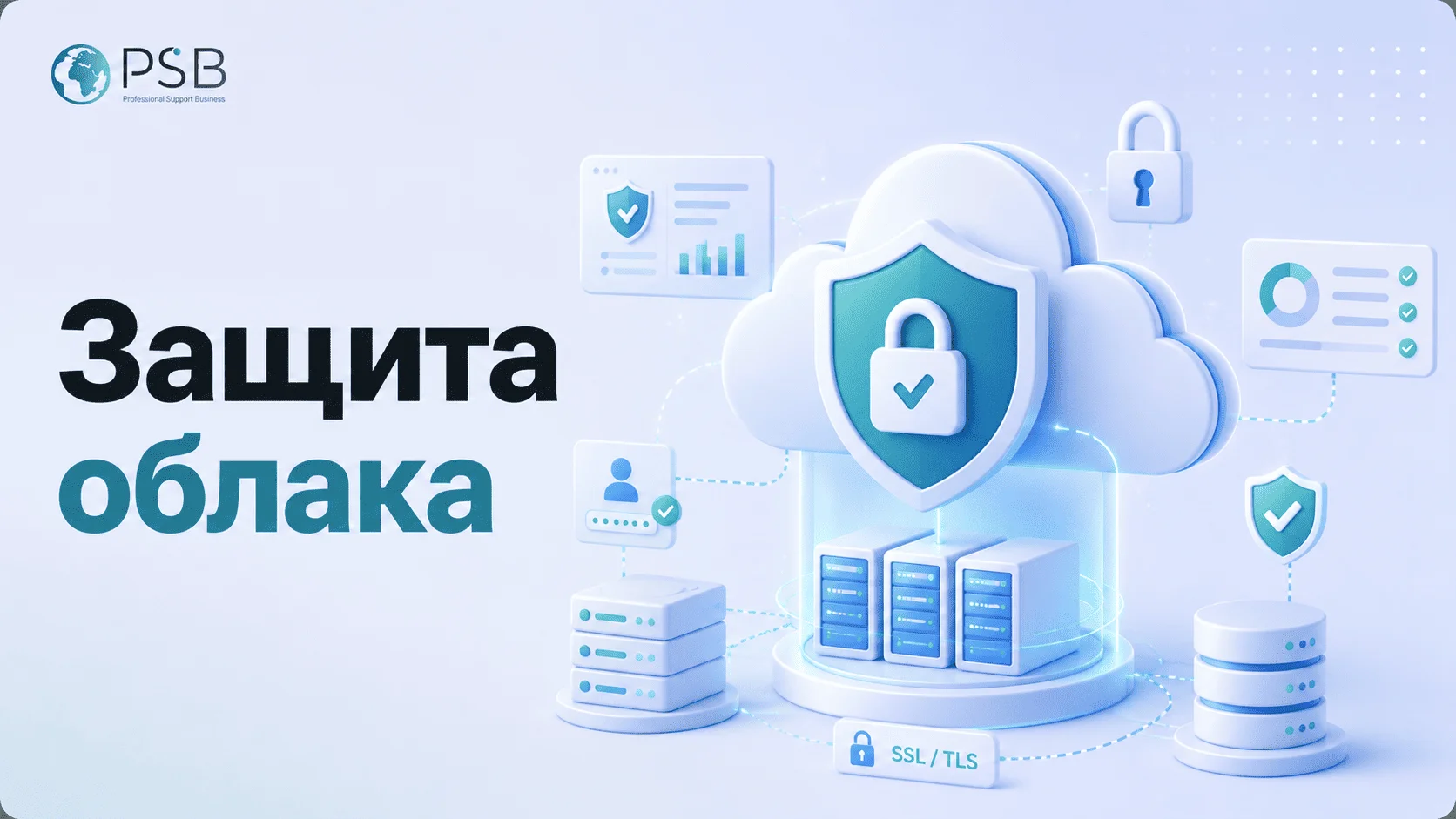
Cloud infrastructure protection is becoming one of the key tasks for businesses working with distributed services, remote teams, and dynamic IT environments. At the same time, the transition to the cloud has changed the logic of security: resources are no longer tied to physical servers, network boundaries have become conditional, and data access is increasingly carried out through APIs and accounts rather than through the familiar network perimeter. Security models that worked effectively for decades in traditional data centers lose predictability in the cloud environment and cease to provide the necessary level of control.
Why the Old Security Model Doesn't Work in the Cloud
The old security model was designed for a more static and isolated infrastructure. The cloud environment, on the contrary, is dynamic and distributed by nature.
Dynamic Infrastructure
In the cloud, infrastructure is constantly changing. Virtual machines, containers, and services are automatically created, scaled, and removed within minutes. Classic security rules designed for fixed servers and pre-configured policies simply cannot adapt to such changes.
Blurred Network Perimeter
The clear network perimeter disappears. Previously, security was built on the principle of "trust inside the network, protect from outside." In the cloud, resources can be located in different regions, use public APIs, have public endpoints, or become accessible from the internet due to configuration errors. As a result, protection based solely on firewalls and network segmentation ceases to be effective.
IAM and API as the New Control Center
The center of control shifts from the network to identity and access. In cloud environments, IAM roles, service accounts, tokens, and API keys play a key role. The old model does not work well with this level of permission granularity and does not account for risks associated with credential compromise or access configuration errors.
CI/CD pipelines, infrastructure as code, and auto-scaling create an environment where changes occur without human intervention. This speeds up development but simultaneously increases the likelihood that incorrect configurations will reach production and remain unnoticed without specialized monitoring.
Finally, classic approaches are not designed for the shared responsibility model. In the cloud, the provider is partially responsible for security, and the client is partially responsible. Using familiar tools without understanding this boundary creates a false sense of security and leaves critical vulnerabilities unaddressed.
That is why cloud infrastructure security requires a rethinking: a transition from perimeter protection to access management, configuration control, and continuous environment monitoring.
What Exactly Breaks in the Old Approach
When companies move infrastructure to the cloud, they often continue to use familiar security methods without considering how much cloud technologies change the risk model itself. As a result, the old approach stops seeing real threats because it relies on assumptions that no longer work in a distributed and dynamic environment.
Let's list the risk factors.
Protection Only at the Network Boundary
The classic model is built around the perimeter, but in the cloud this perimeter is blurred or absent altogether. Services, APIs, and managed components are accessible from outside, and many threats arise within the environment due to configuration errors or access compromise.
Focus Only on Servers and Virtual Machines
The old approach "sees" only VMs and hosts, ignoring PaaS services, containers, functions, IAM roles, and APIs. In cloud technologies, these elements most often become entry points for attacks, not the servers themselves.
Manual and Periodic Inventory
In the cloud, resources appear and disappear constantly. Manual lists and periodic audits become obsolete faster than the check completes, causing real threats to go unnoticed.
Disparate Tools Without an Overall Risk Picture
Individual scanners, logs, and alerts are not connected to each other. As a result, security reacts to noise rather than understanding which combinations of events and configurations create critical risk right now.
What Cloud Security Looks Like Today
Modern cloud security is built not around servers and networks, but around access, configurations, and continuous risk monitoring. This is because cloud technologies are inherently dynamic: resources are created automatically, change within minutes, and often do not have a fixed "boundary" like in classic infrastructure.
Shared Responsibility Model
The Shared Responsibility Model means that security in the cloud is divided between the provider and the client. The provider is responsible for physical data centers, equipment, and basic infrastructure. The business is responsible for cloud service settings, access rights, data, accounts, and security logic. The specific boundary of responsibility depends on the service model: in IaaS, the client controls more settings; in PaaS and SaaS, the provider takes on some tasks, but data, access, and configurations still remain the business's area of focus.
The mistake of the old approach is to expect that "the cloud is already secure by itself." In practice, most incidents occur not due to provider vulnerabilities, but due to client-side configuration errors.
Identity-First Security
Identity-First means that at the center of protection is not the network, but the user, service, or application.
In the cloud:
- IP addresses and network location can no longer be the sole basis for trust,
- resources are dynamic and can be accessible from different networks and regions,
- services communicate with each other via APIs.
Therefore, the key question of cloud infrastructure security is who exactly is performing the action and with what permissions, not just which network the request came from. Identity and Access Management (IAM) becomes the main element of protection.
Continuous Posture Management
Continuous Posture Management is constant cloud state checking, not a one-time audit.
Instead of the "check and forget" logic, the following approach is used:
- real-time configuration monitoring,
- automatic detection of deviations from security policies,
- quick notifications or auto-remediation.
This is critical because cloud infrastructure can change dozens of times a day – it is impossible to keep up manually.
Security from Code to Runtime
Security from Code to Runtime means that security begins at the code stage, not after system launch.
The approach includes:
- checking infrastructure code (Terraform, CloudFormation, etc.),
- configurations analysis before deployment,
- monitoring running resources in production.
This approach reduces the risk that a vulnerable or insecure configuration will ever reach the production environment.
Risk Context Instead of a Stream of Unrelated Alerts
Modern cloud security focuses not on the number of alerts, but on their significance.
Instead of hundreds of individual notifications, the system should answer the questions:
- how critical is a specific vulnerability,
- is there a real attack path,
- which resources and data are at risk right now.
This allows security teams to work with real risks rather than drowning in the noise of technical warnings.
Where to Start for Businesses That Already Have Critical Services in the Cloud
When a business is already using the cloud for important processes – CRM, databases, finance, internal services – sudden security changes can be risky. Therefore, you need to start not with "tightening the screws", but with understanding the current state and building control step by step. In such scenarios, what matters is not a set of complex tools, but a clear entry point: what is critical, where are the accesses, which resources are exposed, and what to fix first.
Critical Accounts, Projects, and Data
The first step is to understand what is truly critical for the business. This typically includes:
- customer and order databases,
- accounting and financial data,
- CRM and internal systems,
- infrastructure that ensures the operation of the website or application.
The point of this step is simple: not "everything in the cloud is important", but there are 5–10 services whose shutdown immediately impacts the business.
IAM, Roles, Keys, and Service Accounts
Next, it is important to understand who has access to management.
In the cloud, this includes:
- administrators (full control),
- employees with partial rights,
- automated service accounts,
- external contractors.
A common problem is more access than needed. Terminated employees or old keys continue to work.
Public Resources and Configuration Errors
In the cloud, a service may have a public access point or become accessible from the internet due to a configuration error.
Examples:
- a database with an open port,
- a test server that was forgotten to be closed,
- a file storage without access restrictions.
This is one of the most common sources of problems: not a hack, but a configuration error.
Visibility of Assets, Vulnerabilities, and Secrets
Without a complete picture, it is difficult to manage security.
You need to understand:
- which servers and services are running,
- where they are located,
- which resources are active and which are no longer used,
- which have internet access.
Risks That Accumulate Invisibly
There are things that are often ignored:
- old API keys that no one disabled,
- test environments left in production,
- weak passwords or lack of access rotation,
- services without updates.
These problems do not look critical individually, but together they create an entry point for attacks.
Gradual Expansion of Control
The right strategy is not to rebuild everything in one day. A working sequence:
- Identify critical services.
- Check access rights.
- Close exposed resources.
- Organize the infrastructure.
- Enable regular change control.
How PSB Hosting Can Help with the Infrastructure Foundation
PSB Hosting does not replace cloud security tools, IAM audits, or response processes, but it can be part of the infrastructure foundation. On VPS, you can host internal services, APIs, staging environments, VPN infrastructure, monitoring, and auxiliary components for DevOps and Security teams.
This approach helps separate critical services from test environments, control server configuration, store operational data, and safely test changes before production. At the same time, cloud service security and cloud infrastructure protection still require IAM configuration, public resource control, regular configuration checks, logging, and response processes.
Why Processes Matter, Not Just Tools
In cloud security, there is often an expectation that simply connecting the "right product" will automatically close risks. In practice, the cloud environment works differently: it is constantly changing, and solutions only work when clear processes for control, response, and verification are built around them. Tools provide capabilities, but processes determine how these capabilities are applied in real infrastructure.
One Product Does Not Cover All Cloud Security
Cloud security consists of several layers: access, configurations, network, data, API, and workloads. No single tool covers them all simultaneously.
- A vulnerability scanner does not manage access.
- An IAM system does not detect network anomalies.
- Log monitoring does not fix configuration errors.
Cloud infrastructure protection works only as a system: different tools must be connected by a unified analysis and response process.
Where the Cloud Provider's Responsibility Ends
The cloud provider protects the platform infrastructure but does not manage what is deployed on it.
Typically, the provider is responsible for:
- physical data center security,
- hypervisors and basic infrastructure,
- platform fault tolerance.
The client is responsible for:
- access (IAM, keys, roles),
- service configurations,
- data and its storage,
- network settings within the cloud.
Without understanding this boundary, companies often overestimate their level of security.
Why Zero Trust Does Not Eliminate Network Security
Zero Trust is a model where no user or service is considered trusted by default, even within the network.
But this is not a replacement for network security, but an addition to it.
- The network still controls traffic and segmentation.
- Zero Trust adds identity and context verification.
- Together, they reduce the risk of attack movement within the infrastructure.
It is a mistake to think that with Zero Trust you can "turn off the network." In practice, they work together.
Why the Cloud Still Needs Processes, Not Just Technologies
The cloud changes too quickly for security to rely only on tools.
Processes are needed to:
- regularly check access and roles,
- control configuration changes,
- respond to incidents according to a clear scenario,
- synchronize the work of DevOps and Security teams.
Technologies provide data, and processes turn them into actions. Without processes, even the most advanced tools remain just sources of notifications.
Conclusion
In summary, cloud security works not as a set of solutions, but as a system where tools provide visibility and control, and processes determine actions in a dynamic infrastructure. Old approaches built solely around the perimeter and individual servers are no longer sufficient: businesses need access control, regular configuration checks, and clear response processes.